Revealing Urban Heat Island Effect
A Machine Learning Persepctive
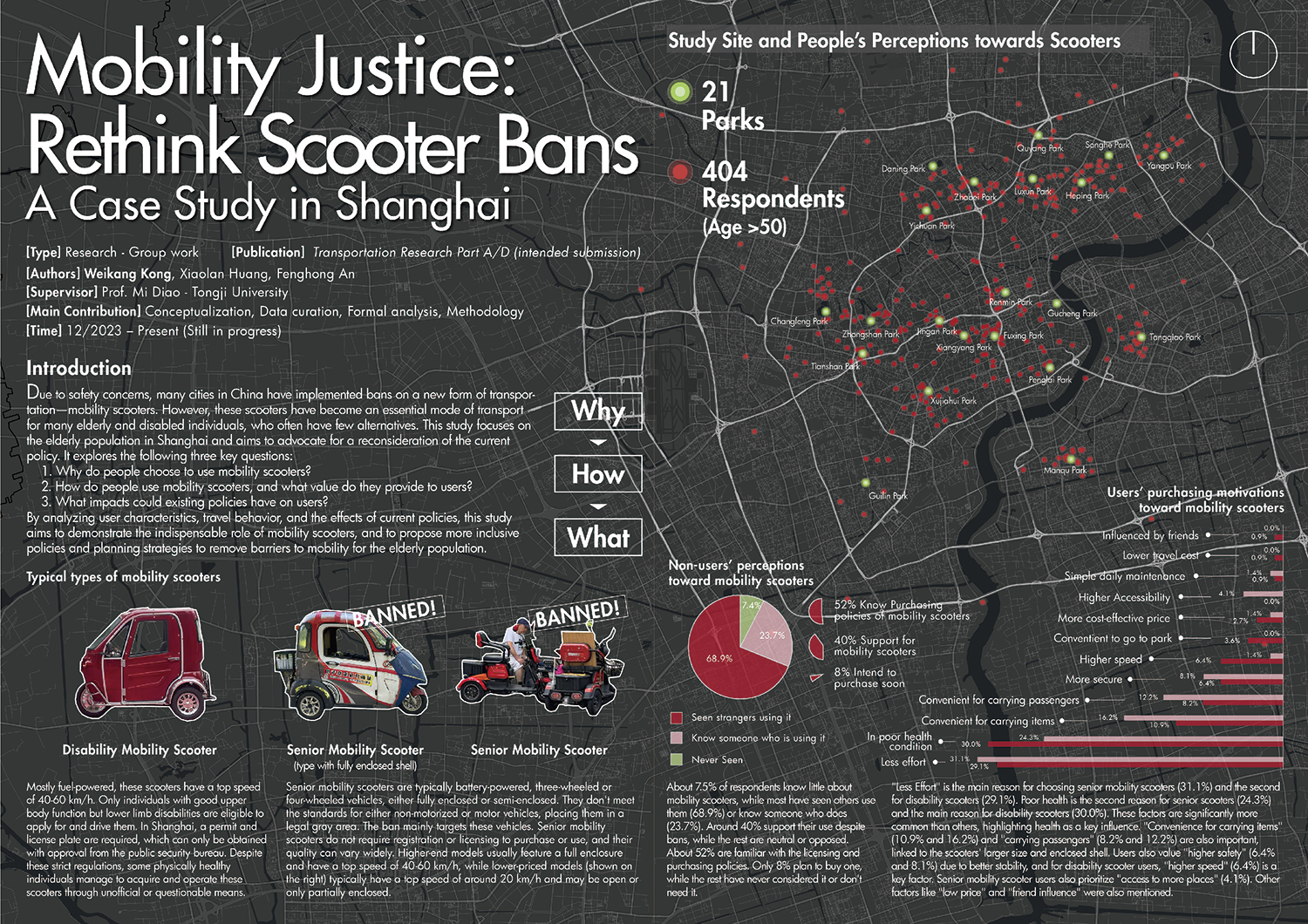
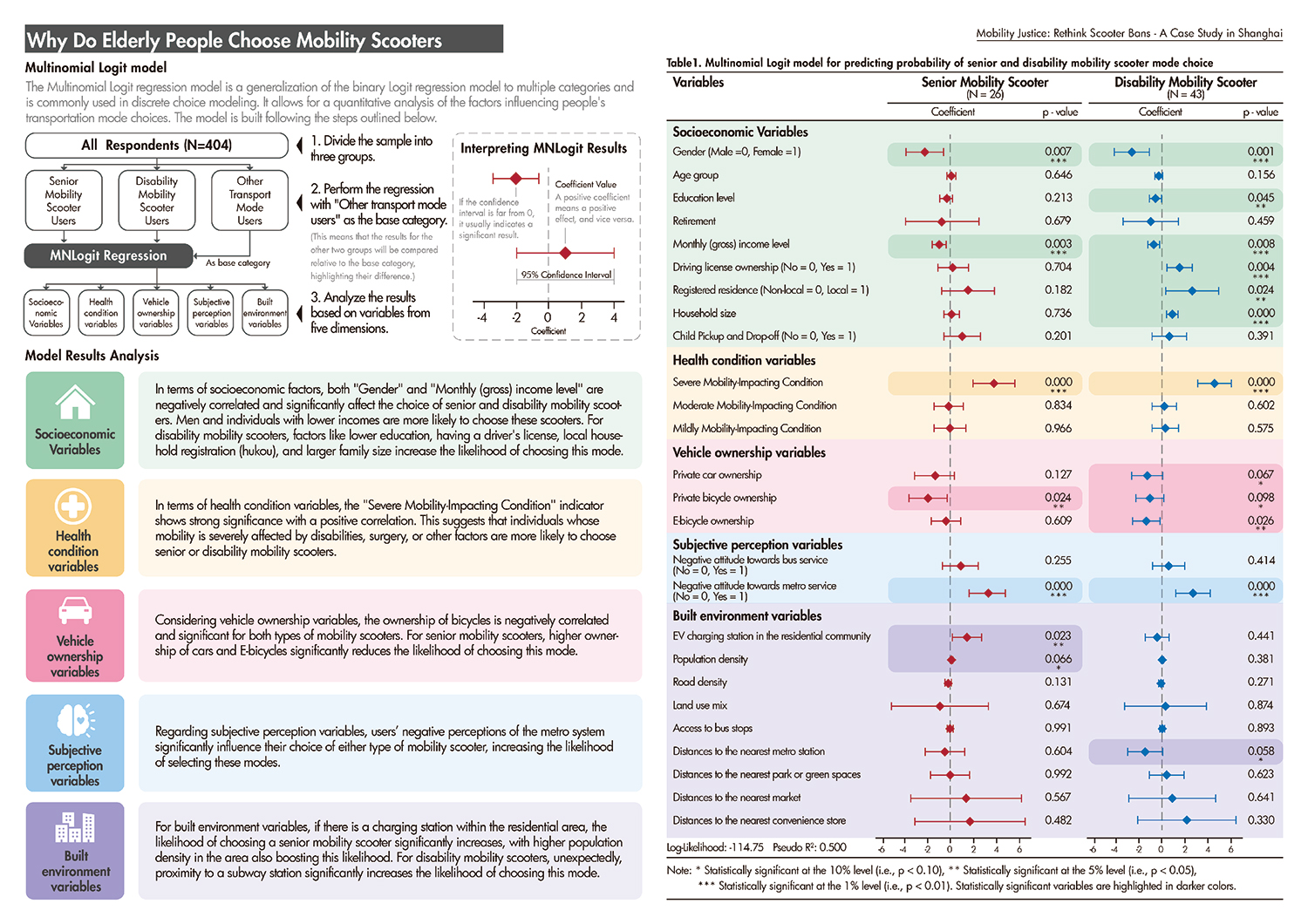
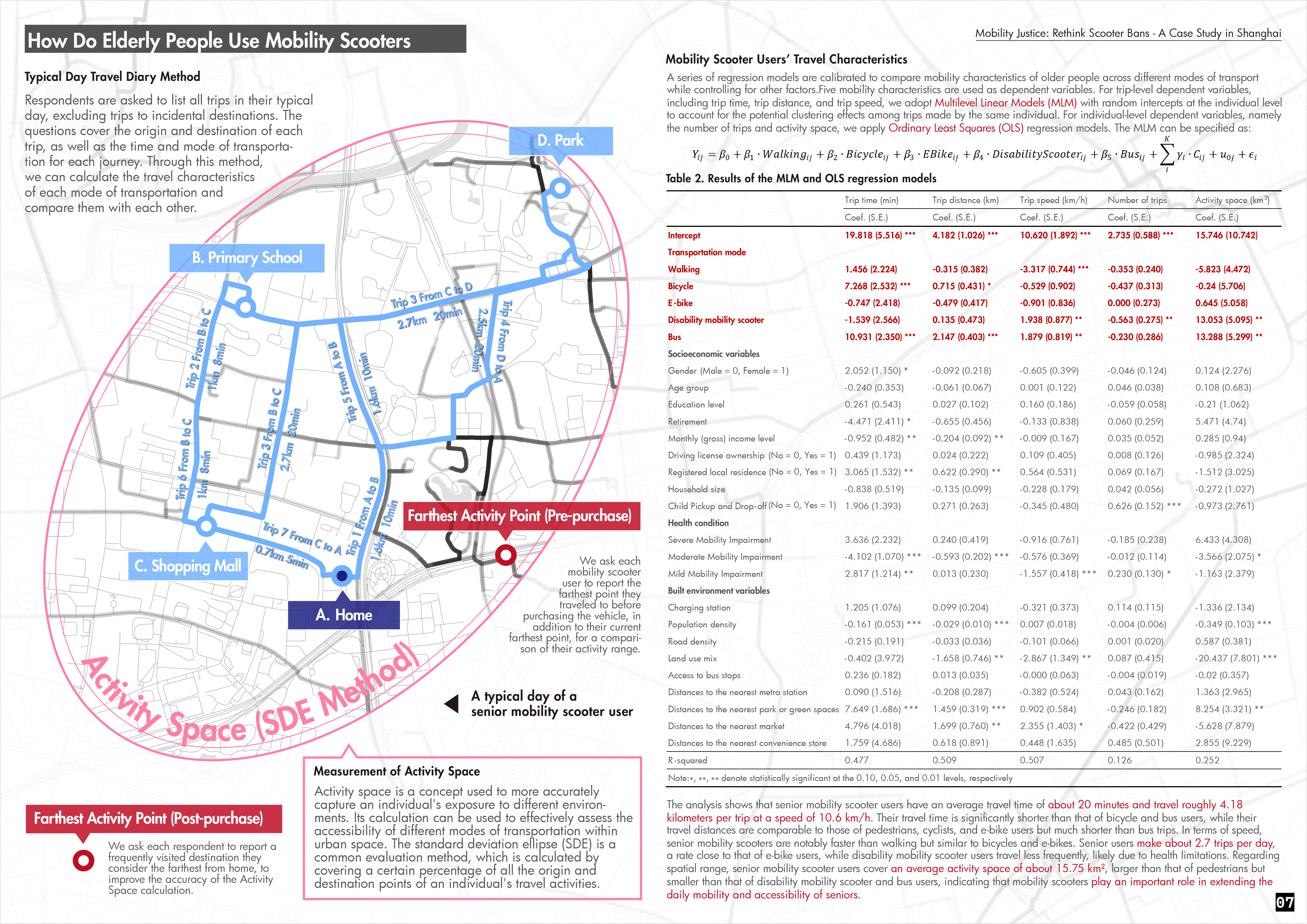
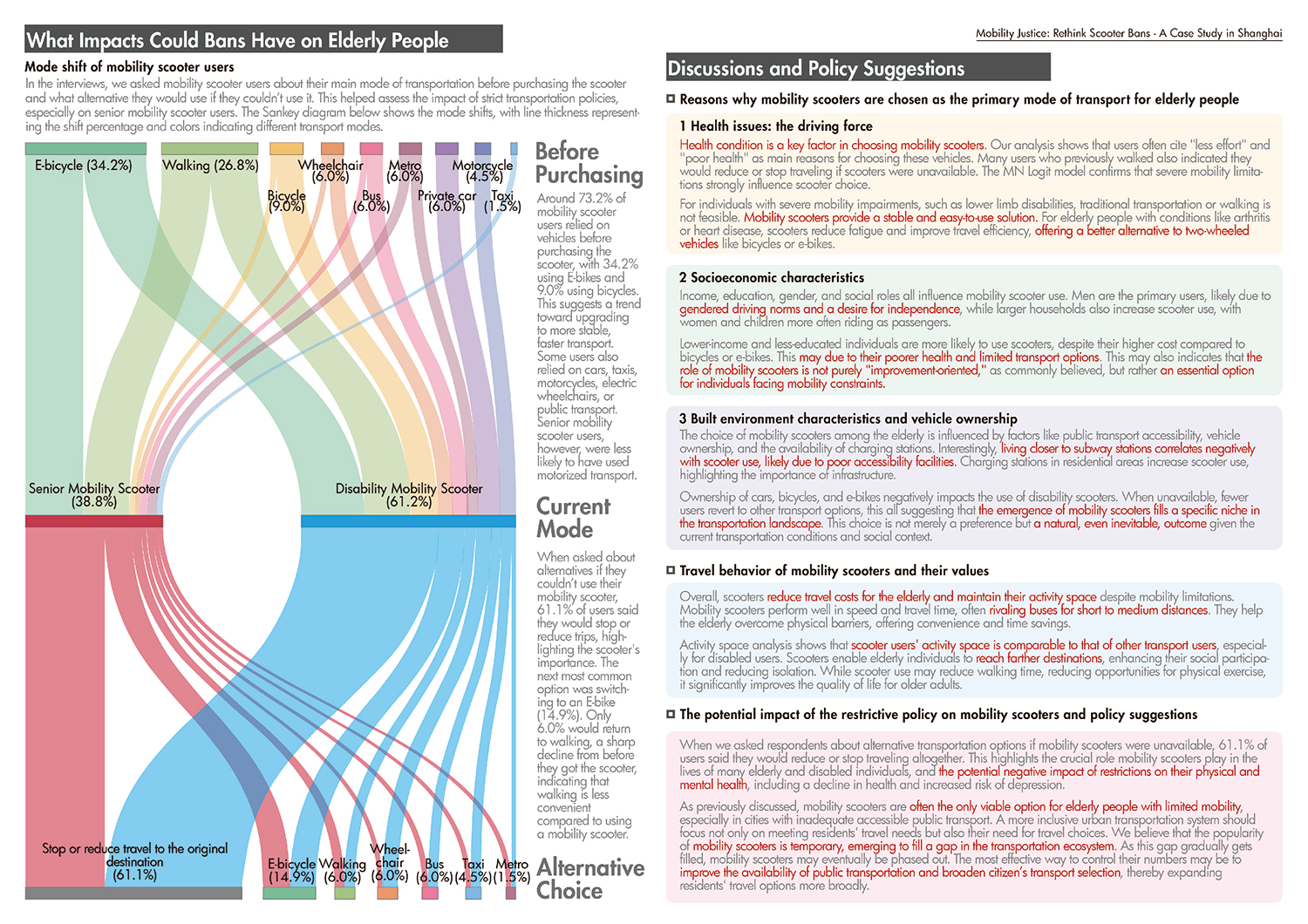
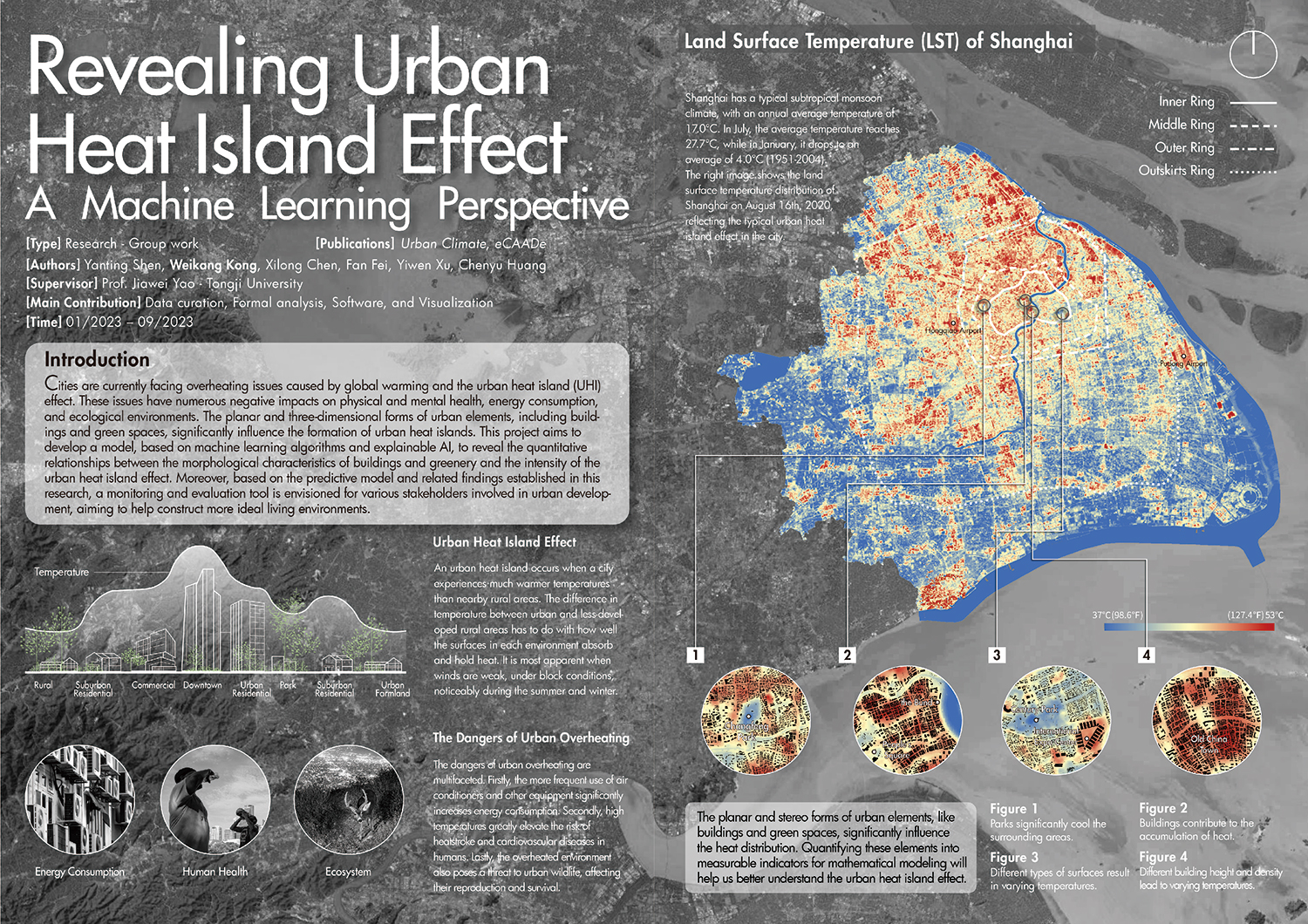
Cities are currently facing overheating issues caused by global warming and the urban heat island (UHI) effect. These issues have numerous negative impacts on physical and mental health, energy consumption, and ecological environments. The planar and three-dimensional forms of urban elements, including buildings and green spaces, significantly influence the formation of urban heat islands. This project aims to develop a model, based on machine learning algorithms and explainable AI, to reveal the quantitative relationships between the morphological characteristics of buildings and greenery and the intensity of the urban heat island effect. Moreover, based on the predictive model and related findings established in this research, a monitoring and evaluation tool is envisioned for various stakeholders involved in urban development, aiming to help construct more ideal living environments.
Time: 1/2023 - 9/2023
Authors: Yanting Shen, Weikang Kong, Xilong Chen, Fan Fei, Yiwen Xu
Supervisor: Prof. Jiawei Yao - Tongji University
Publications:
Shen, Y., Kong, W., Fei, F., Chen, X., Xu, Y., Huang, C., & Yao, J. (2024). Stereoscopic urban morphology metrics enhance the nonlinear scale heterogeneity modeling of UHI with explainable AI. Urban Climate, 56, 102006. DOI
Shen, Y., Kong, W., Chen, X., Fei, F., Xu, Y., Huang, C., & Yao, J. (2023). Using GeoAI to Reveal the Contribution of Urban Park Green Space Features to Mitigate the Heat Island Effect. In Proceedings of the 41st International Conference on Education and Research in Computer Aided Architectural Design in Europe (eCAADe) (Vol. 2, p. 2). Proceeding
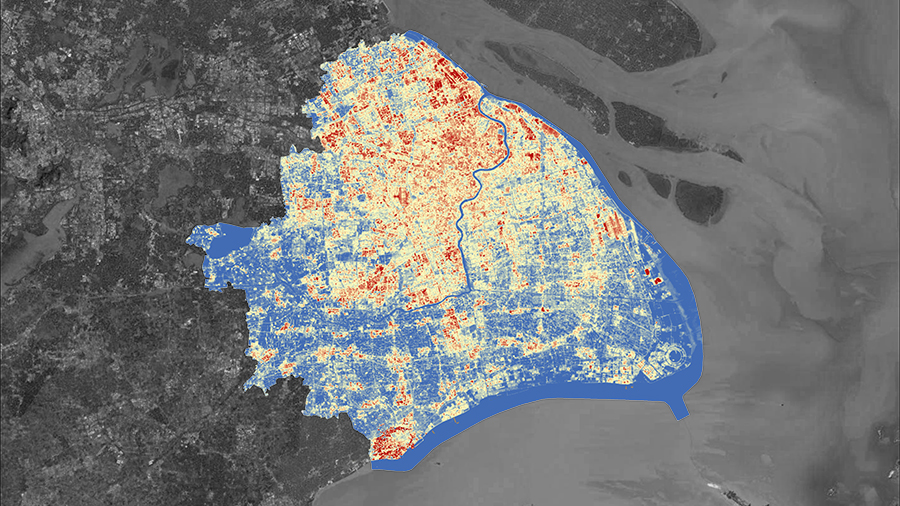
Urban heat island effect in Shanghai
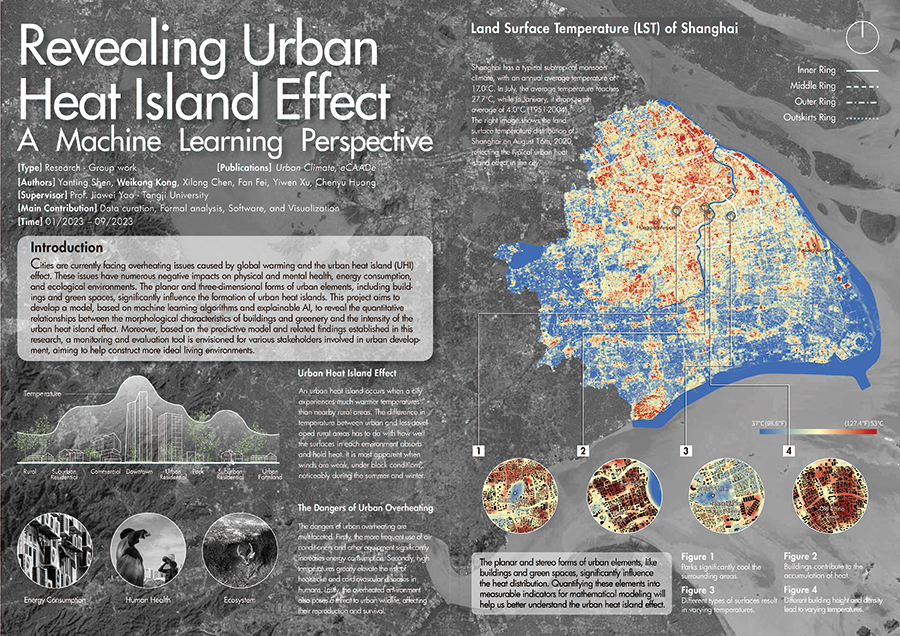
Introduction
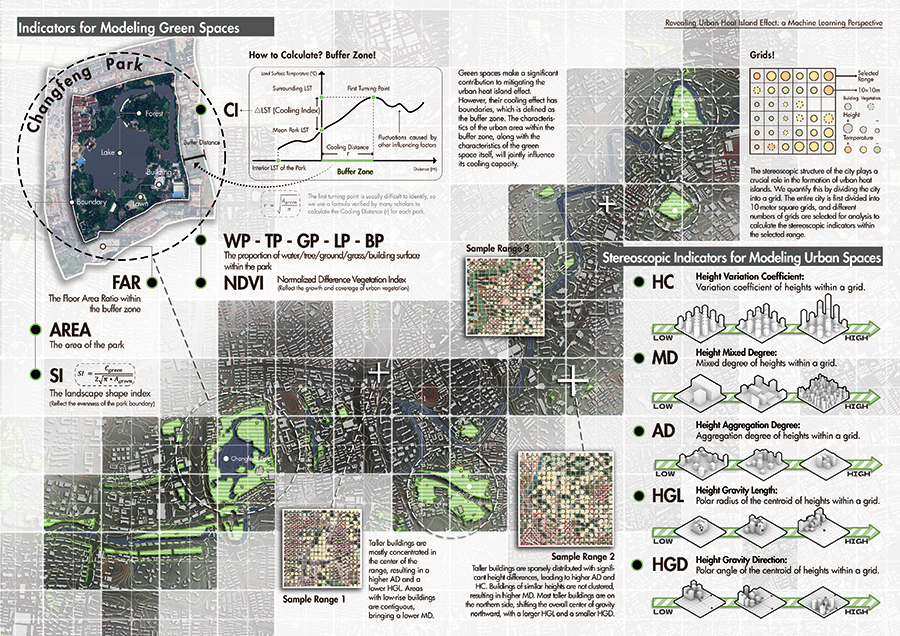
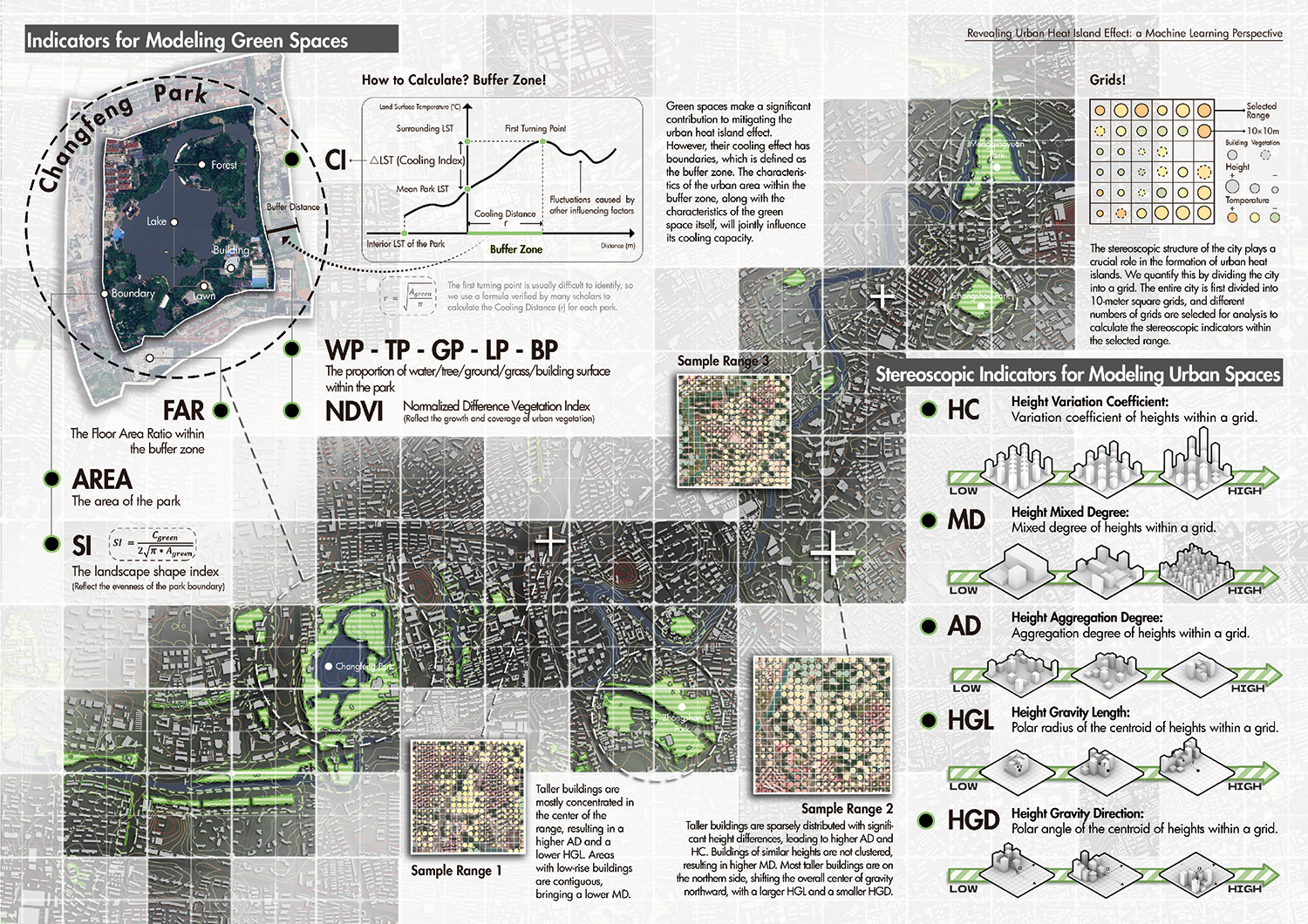
2D and 3D indicators for modeling urban heat island effect
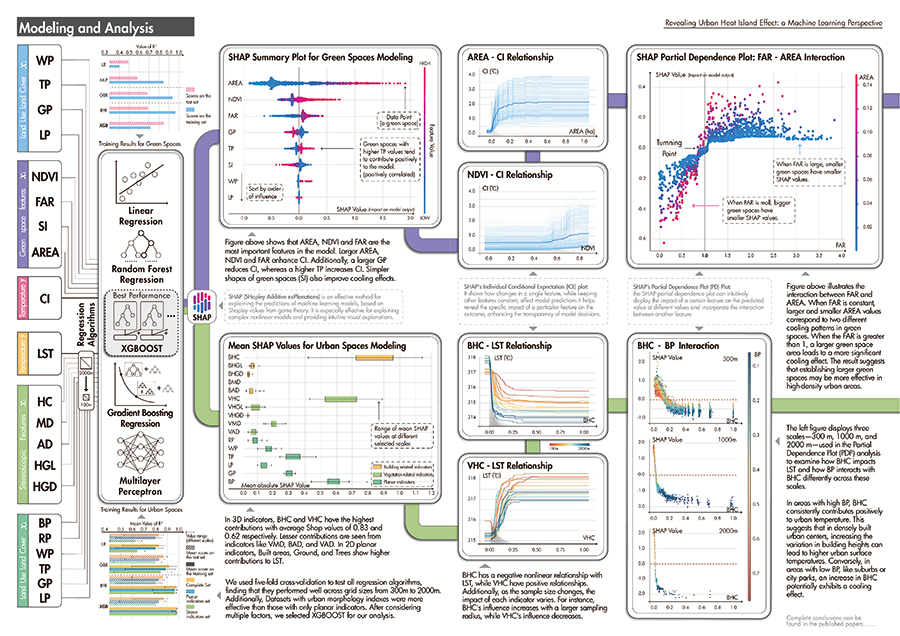
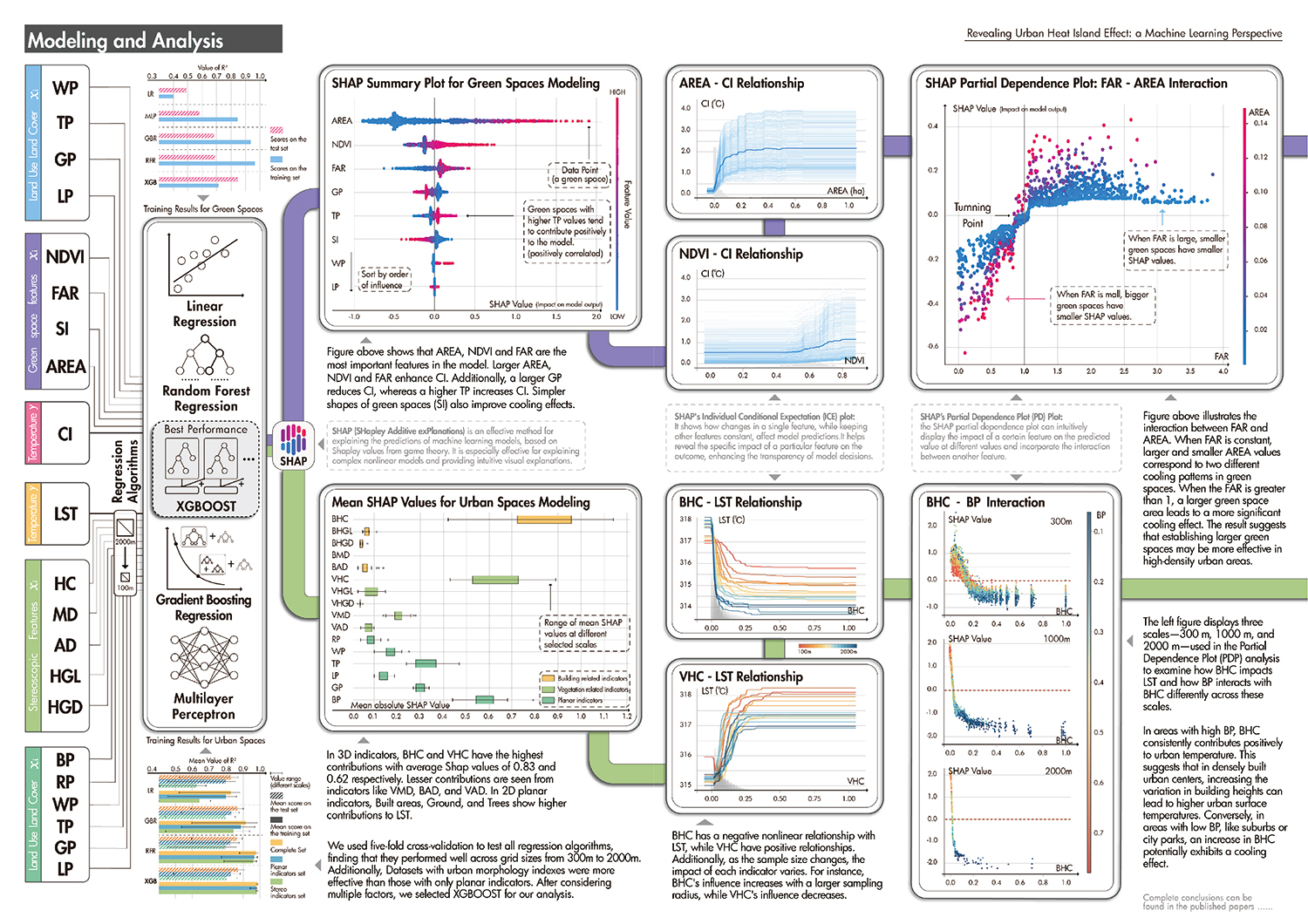
Modeling and analysis with explainable AI
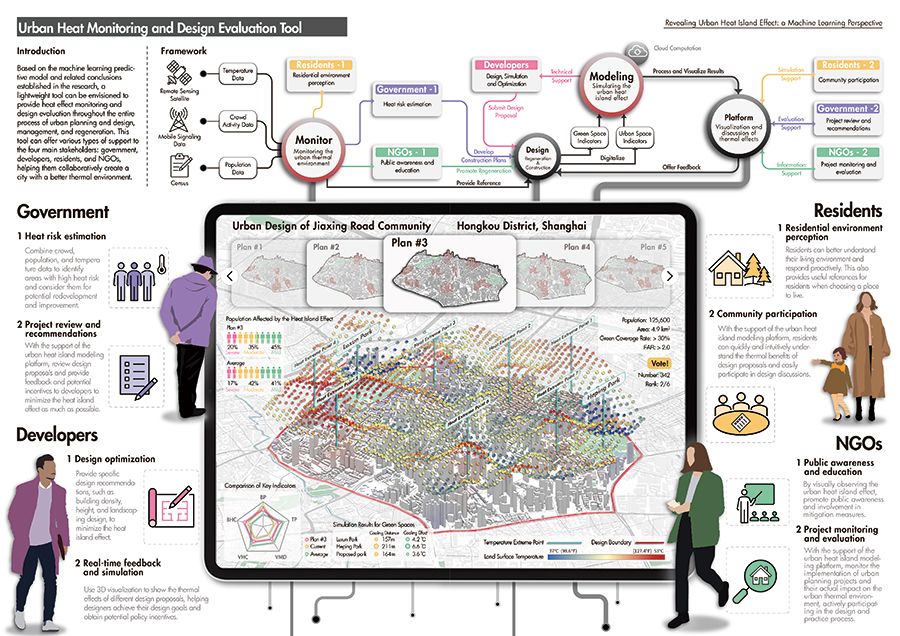
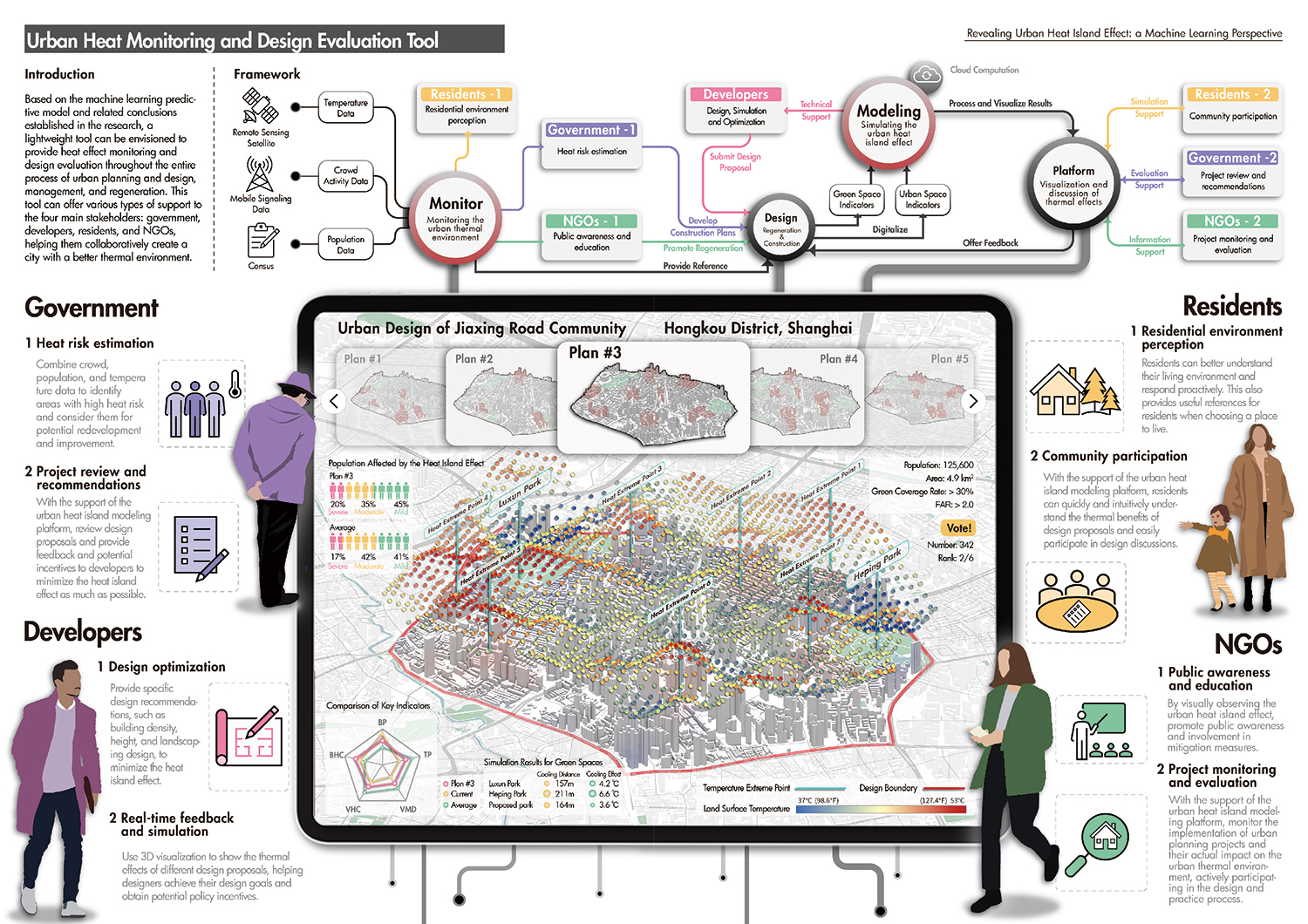
Urban Heat Monitoring and Design Evaluation Tool